
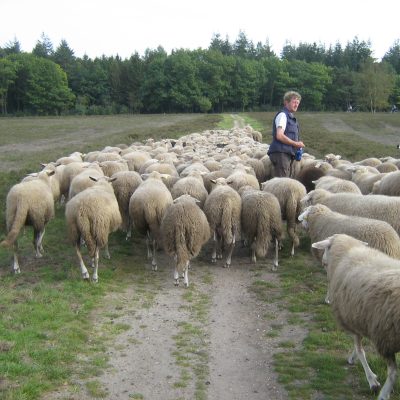
“So when they had eaten breakfast, Jesus said to Simon Peter, “Simon, son of Jonah, do you love Me more than these?” He said to Him, “Yes, Lord; You know that I love You.” He said to him, “Feed My lambs.” He said to him again a second time, “Simon, son of Jonah, do you love Me?” He said to Him, “Yes, Lord; You know that I love You.” He said to him, “Tend My sheep.” He said to him the third time, “Simon, son of Jonah, do you love Me?” Peter was grieved because He said to him the third time, “Do you love Me?” And he said to Him, “Lord, You know all things; You know that I love You.” Jesus said to him, “Feed My sheep.” – John 21:15-17
“Be diligent to present yourself approved to God, a worker who does not need to be ashamed, rightly dividing the word of truth.” – 2 Timothy 2:15
The Lord Jesus has blessed His church with faithful pastors who are men who are well qualified, having proven godly character. He blesses her with such men who He has called to govern and minister to her in all the ways Jesus has ordained, as His undershepherds. It’s good and right, therefore, for men who are preparing to enter pastoral ministry, men who are serving as pastors, as well as the members of His bride to know the details of Christ’s design, His work in and through ministers of the Gospel, and the work He calls us to do in your midst.
Jesus’ commission to Peter, as He restored Peter to ministry, in John 21 teaches you three important things about the pastor’s work:
- The pastor’s labors are fueled by a deep, dear, and enduring love for Christ, and therefore such love for His people, your growth, and well-being.
- Considering that love, one of the chief duties of a pastor is to be a shepherd. Know that being a shepherd is what “pastor” means. Like Peter, Christ calls all of His shepherds to feed His lambs. How are we to feed you? What are we to feed you with? Jesus’ call is centered on our spiritually nourishing you by feeding you His Word. No other word will do. No other word will spiritually nourish you. The Word of the living God, which gives wonderful words of life, which reveals and proclaims Christ and Him crucified is what you truly need in every facet of your life. (Matthew 4:4, 1 Peter 2:2)
- Like Peter, Christ also calls all of his shepherds to tend His flock. Know that tending is distinct from feeding as it speaks to the shepherd’s duty to guard and guide Christ’s beloved flock under Christ’s direction, and by the grace and work of His Spirit. (1 Peter 5:2) Faithful pastors carry this duty out in concert with the ruling elders of the congregation.
Once again, in the book, entitled, “The Pastor: His Call, Character, and Work” by Faculty and Friends of Old Princeton, Chapter 5 contains Archibald Alexander’s sermon titled, “The Pastoral Office”, which he preached before the Association of the Alumni of the Theological Seminary at Princeton in May 1834. In his sermon, Alexander presses the importance of the pastor’s duty to feed the flock, saying, “This duty of feeding the sheep of Christ, implies, that we should endeavour to gather them into the fold, and introduce them to the pastures which he [Christ] has provided.” (Old Princeton, 95) It’s so true that Christ’s pastures are the green, lush, nutritious, and safe pastures that He has made for you, His beloved sheep to both flourish and rest secure in.
Alexander goes on to make the important point regarding the pastor feeding the flock through the preaching of the Word. He notes, “To feed the church of God, it is necessary, that the truth of the Gospel be preached. Error can never nourish the soul. Error, even when mingled with truth, is like poison in our food. It is a thing much to be dreaded and avoided, to preach what is not true; or, what God has never commanded us to teach. The pastors of Christ’s flock, have the strongest motives to induce them to ‘take heed to themselves and to their doctrine’. They should be exceedingly solicitous to know what the truth is, not only for their own sakes, but for the sake of the people; and when they do know the revealed will of God, woe be unto them, if they do not preach it faithfully.” (Old Princeton, 100-101) Beloved, error can never nourish the soul. Did you catch that? The Apostle Paul knew this as he taught Timothy in 2 Timothy 2 that part of the pastor’s work is to be diligent in his own walk and his rightly dividing the word of truth. Such right division of the Word requires Spirit wrought grace and wisdom that is connected with your pastor’s diligence in prayer and longtime study of the Scriptures, which then is evident in his own life and the good food he feeds you.
Considering this need for diligence in the pastor’s life, Samuel Miller, in his sermon “Holding Fast the Faithful Word”, teaches you an important reason for said diligence. He said, “That the ministers of our holy religion, if they desire to convince, to convert, or edify their fellow men, are solemnly bound to maintain for themselves, and diligently to impart to those around them, sound doctrine, or in other words, the genuine truths of the Gospel.” (Old Princeton, 136) My friends, it’s important that a pastor not only have an evangelistic desire to have an able defense of the faith, but also see what they must do. As Paul taught Titus about elder qualifications in Titus 1:9, a qualified man must be one who is “holding fast the faithful word as he has been taught, that he may be able, by sound doctrine, both to exhort and convict those who contradict.”
Along with feeding the flock, tending the flock, and holding fast to the Word, what else is part of the pastor’s work? The OPC Book of Church Order, Form of Government, Chapter VIII gives a concise and helpful summary of the pastor’s duties:
“Christ’s undershepherd in a local congregation of God’s people, who joins with the ruling elders in governing the congregation, is called a pastor. It is his charge to feed and tend the flock as Christ’s minister and with the other elders to lead them in all the service of Christ. It is his task to conduct the public worship of God; to pray for and with Christ’s flock as the mouth of the people unto God; to feed the flock by the public reading and preaching of the Word of God, according to which he is to teach, convince, reprove, exhort, comfort, and evangelize, expounding and applying the truth of Scripture with ministerial authority, as a diligent workman approved by God; to administer the sacraments; to bless the people from God; to shepherd the flock and minister the Word according to the particular needs of groups, families, and individuals in the congregation, catechizing by teaching plainly the first principles of the oracles of God to the baptized youth and to adults who are yet babes in Christ, visiting in the homes of the people, instructing and counseling individuals, and training them to be faithful servants of Christ; to minister to the poor, the sick, the afflicted, and the dying; and to make known the gospel to the lost.”
See and better understand the multi-faceted work of your pastor as he seeks to be faithful to the call and charge Christ has given him. He has a wonderful, God ordained ministry to you, your family, and the church. Pray that the Lord would not only bless him, but also comfort and strengthen him. Pray that God would continue to sanctify him and make him into an even more faithful shepherd under Christ, that he would be even more effective in the work Christ has set him to be about the business of doing for your good and His glory.
Works Cited:
- Faculty and Friends of Old Princeton. The Pastor. Banner of Truth, 2024. pp. 89-176.
- Archibald Alexander, ‘The Pastoral Office’. A Sermon, Preached at Philadelphia, before the Association of the Alumni of the Theological Seminary at Princeton on Wednesday Morning, May 21, 1834 (Philadelphia: Henry Perkins, 1834).
- Samuel Miller, Holding Fast the Faithful Word: A Sermon, Delivered in the Second Presbyterian Church, in the City of Albany, August 26, 1829 at the Installation of the Rev. William B. Sprague, D.D., as Pastor of Said Church (Albany: Packard and Van Benthuysen, 1829)